Tuesday, May 31, 2011

"A form of government in which no one owns any land and everyone works towards the greater good." 


Communism is a political and economic system which is characterized by the collective ownership of property (by the proletariat) and, furthermore, by the organization of labor for the common purpose of all members. Communism is similar to socialism, but contrasted with capitalism.

Although people popularly associate communism with the writings of Karl Marx, in fact the basic ideas behind it can be traced back much further. Among the earliest known writings on the subject is the Ancient Greek concept of a "Golden Age," a time of bliss and harmony without private property. Plato's ideal society was also one in which all property was held in common. It seems likely that the very earliest human tribes held much, if not all, property communally. sadly this failed do to the fact that people are greedy and goes against human nature.   

"A form of government in which everyone is independent and works to support there own life style"


Laissez faire capitalism means the complete separation of economy and state, just like the separation of church and state. Capitalism is the social system based upon private ownership of the means of production which entails a completely uncontrolled and unregulated economy where all land is privately owned. But the separation of the state and the economy is not a primary, it is only an aspect of the premise that capitalism is based upon: individual rights. Capitalism is the only politico-economic system based on the doctrine of individual rights. This means that capitalism recognizes that each and every person is the owner of his own life, and has the right to live his life in any manner he chooses as long as he does not violate the rights of others.


In a capitalist, democratic nation such as the U.S., freedom gives us just about everything and anything that the Vietnamese do not have under their communist government. Contrary to what Karl Marx has written in his manifesto, the living people of a capitalist nation (i.e. USA) of today are more independent and possess more individualities than ever. Economic-wise, Americans are the most progressive people in the world. The U.S. government is not directing the flow of its economy, but the individual businesses of its people are. These people have all the rights in the world to improve their businesses, as long as they are conducting them under the legal guidelines of the government. Such freedom in a capitalist society gives the Americans much greater advantages over the Vietnamese in improving economic conditions.


In a communist nation, the judicial system can be very flexible at times. Crimes are rarely committed under such watchful eyes as the Communists, and the result of any crime would also be too harsh to bear. Safety is probably the best thing that the Communists can provide, but it can also be reversed anytime. By reversing, I mean that some people can also be convicted for not doing anything wrong. As long as someone (a local government cadre) possesses some sort of power, that person has all the right to convict you of anything that they want---yes, even without proof. On the other hand, the system also provides some safety to its people. Unlike in the U.S., crimes such as murdering, raping, robbing, and many others rarely or not even ever occur in communist Vietnam. People do not get away with them as easily as they do in America. There is no such thing as death row or parole in communist nations. Crimes are paid for immediately after they are convicted. Prisons do not have installed televisions nor nice beds for criminals. These prisoners have to earn the food that they eat by doing a certain amount of work for the time that they are sentenced to stay. Overall, the Communists1/4 judicial system works very well comparing to the one possessed by the Americans

Friday, May 27, 2011

William Shakespeare

William Shakespeare was an English playwright and poet who lived in the late 1500s and early 1600s (around 400 years ago). His plays are now preformed all over the world in hundreds of languages, and he is known as one of the greatest writers of all time.  The reason that his work is so popular is that William Shakespear e wrote about human nature and how they behave.  That is why although his words may be hard to understand his word are as relevant now as they were four centuries ago.

From 1599 onwards William Shakespeare’s plays were usually preformed in the globe, a huge open air circular theater in Southwark in London.  The theater could hold 3000 people, and there were two performances a day. Along with other members of his theater company the Chamberlin’s men William Shakespeare owned a share in the globe and made a lot of money from it.


The Chamberlain’s men originally used a theater called The Theatre in north London. but they fell out with the land lord and in 1599. The theatre was dismantled and its timers were moved and used to build the globe.  In 1613 a spark .from cannon fired at a performance of Henry VIII set fire to a thatched roof and the globe burned down. (No one was badly hurt.) It was re-built with a tiled roof and stood until 1644, when the puritans tore it down in the Civil War.

Wednesday, May 11, 2011

The main point of the essay you are about to read is how the book animal farm and the movie the mouse that roared both share the common interest in pointing out the flukes in governments, though they both do it in very different ways.  

In the dystopia book (a dystopia is a society that was taken over and controlled corruptly) animal farm some farm animal’s rebel against the owners of the farm. The animals then take over and run it without any humans. After that the pigs slowly take over the farm society.

In the movie the mouse that roared a small Uruapan country goes bankrupt because there main source of money, a local whine they export to America gets copied. They then a desperate attempt to make money go to war with America with the plan that after they lose they can get rich off of   rehabilitation money.
Here are some things that the book and the movie have in common. They are both about corrupt points of power, they both are about war, and they both are about manipulating people.

Here are some reasons why the book and the movie are different. One is a comedy and the other is a dystopia, in one the main people are animals and in the other they are all humans, the story’s are completely different. 

All in all I think that though they do it in a different way they are both trying to point out messed up stuff in the government.(I say all in all when  I cant be bothered to think of a conclusion-el paragraph) And now I will finish this long hand written essay with the simple yet heart stopping smiley face enjoy :D.

Tuesday, May 10, 2011

Gulliver’s Travels book review

Jonathan Swift penned his most well-known novel, Gulliver’s Travels, in 1726. Most readers are familiar with the first part of the book – Gulliver’s journey to Lilliput where he is taken captive by the diminutive Lilliputians, and later lives among them for several months. But the full novel is actually written in four parts where Gulliver travels to several other locations, meeting other strange and fascinating creatures.
In part two, he finds himself in danger of being crushed by the huge inhabitants of Brobdinghag whose size is roughly twelve times that of Gulliver. Gulliver is rescued from this community by an eagle, who seizes the traveling box in which Gulliver sleeps, and drops it into the ocean where he is picked up by an English vessel.
Part three introduces the reader to the flying island of Laputa where the inhabitants are thrilled by music and mathematics, but have no practical skills.
Finally (in part four), Gulliver makes his way to the country of the Houyhnhnms who are actually horses who rule the country and the deformed creatures (“Yahoos”) who are, in fact,  human beings in their base form. Gulliver is welcomed into a horse’s household, and eventually rejects humans as merely Yahoos with very little reasoning ability which simply adds to the vices Nature has given them. Eventually Gulliver is expelled from the country as he is seen as a danger to civilization.
Gulliver’s Travels is primarily a satire which pokes fun at European government, and the petty differences between religions. The Lilliputians perhaps are the most petty of all – squabbling over the size of their shoe heels, and going to war with their closest neighbors because of a disagreement over how to eat an egg. The book becomes darker as it progresses, with Gulliver moving from an optimistic and rather innocent character, to one whose view of the world becomes more cynical.
Although I found this novel to be an interesting read, I must admit that some of the long, circular sentences left me skimming at times. This book is full of cultural, political and religious references which might be best explored as part of a book club or in a classroom. For the reader simply looking for an entertaining book, Gulliver’s Travels might be a little too deep.
Despite some of my reservations, Gulliver’s Travels is a good classic novel. As with many people, my favorite section was the first. It is hard not to be delighted with Gulliver’s time spent in Lilliput.

In the movie Gulliver fakes being a travel writer and gets sent to the Bermudian triangle to write a report about it. While Gulliver is in the triangle he gets sucked into a giant spinning pillar of water and faints. When Gulliver wakes up he finds himself covers in tiny people called Lilliputian. The book is deferent from the movie is several ways. The movie is set in modern time where as the book is set in a time where people still use boats to travel the world.  the themes of the book and movie are different because in the book it takes things in society and points out all the wierd problems. In the movie the theme is "there are no small people only small jobs". Now would somebody tell me what that means?  

Wednesday, May 4, 2011

Macbeth

Macbeth is a great warrior who helps win an important battle for his King, Duncan. The King wishes to reward him by making him Thane (kind of like knighting him). Before he finds this out, on his way back to see the King, Macbeth meets three witches who predict he will be Thane. Macbeth is suspicious of them. They then say he will be one day be King. Macbeth doesn't believe them and thinks them evil. On meeting with the King, he learns he is to be Thane - wow, the witches got it right! But if that's true... is he really going to be King? When he meets with his wife, Lady Macbeth, he tells her all that; lmurdering Duncan and his heirs, who are guests at Macbeth's castle. Macbeth murders the King, and Duncan's sons flee in fear of their lives, leaving the way clear for Macbeth to become King.

To cut a long story short, Duncan's son Malcolm, and other allies, mount a rebellion against King Macbeth, who has become a tyrant and has murdered lots of people to cling on to power. The witches again appear and tell Macbeth not to worry as he can only be killed of a man not born by a woman. The battle commences and Macbeth is fighting well, like a man who believes he cannot be killed (everyone is born of a woman, right?) However, when he meets the warrior Macduff, one of Malcolm's allies, Macduff says that he was born by caesarian section - not born normally, but cut from his mother's womb. Macbeth then knows the game is up. Macduff murders Macbeth and Malcolm, Duncan's son, is crowned the new King.

Monday, March 28, 2011

Geoffrey Chaucer's The Canterbury Tales

Geoffrey Chaucer's The Canterbury Tales is considered as one of the major beginning marks in English Literature. The Canterbury Tales, written in 14th century is a collection of short stories mainly in verse form. The stories in The Canterbury Tales are told by a group of 24 pilgrims on pilgrimage from Southwark to Canterbury to visit the shrine of St. Thomas Becket at Canterbury Cathedral.


  One of the first few tales is called “The Man Of Law” in it The Man of Law tells a Romance tale of a Christian princess named Custance who is married to the Syrian Sultan on condition that he converts to Christianity. The Sultan's mother connives to prevent this and has Constance set adrift on the sea. Her adventures and trials continue after she is shipwrecked on the Northumberland coast.  I didn’t really like this one because I despise romance books. I think the moral is that you shouldn’t believe something someone tells you unless you really believe it.

                The Canterbury tales are the kind of book you read when you have nothing else to do and you have a glass of tea. The tea is to keep you awake. If you achieve that then the rest of the book isn’t that bad. The style of righting used in this book reminds me of the book the Knights of the Round Table, also a medieval adventure. The Canterbury Tales righting style reminds me of this because of the way the characters talk. They talk all like: “hail thou mistress” and stuff like that, you get the idea.


                I would give Geoffrey Chaucer's The Canterbury Tales four stars out of ten. One star because it’s a very famous book, one star because I was able to finish it, one star because for some unexplainable reason it reminds me of Monty python and the Holy Grail, and finally the last star because I somewhat enjoyed reading it. I would recommend this book for teenagers who like to read and are able to understand big words.              

Tuesday, December 7, 2010

First Lego League

FLL_SUNYIT_2010_crashtestduI participated in First Lego league this year. The theme was Body Forward, and our team team chose how to heal or improve a body part. We decided to focus our research on the spine.

In our grand search for a problem we searched dangerous jobs online.

We came up with an entire list but finally narrowed it down to spine surgery. It’s not really a dangerous job but it can be very hard.

We then interviewed a neurosurgeon who does spine surgery. He taught us all about spine surgery and what was required.

After that we went on other field trips.

I went to the MIT museum in Boston. We got to see the Black Falcon, an early surgical robot.

We also visited an operating room at St. Peter’s Hospital.  While we were there we got to see the Da Vinci robot which is a actual robot that is being used today.  Go to my mom’s blog, at Albany Kid, to read about this field trip.

Our team decided to solve the problem of surgery in urban bomb situations. This solution solves two kinds of problems: improving the body, and healing a body. Currently, surgeons are limited in what kind of surgery techniques they can do with their human body. In addition, a war situation can be very dangerous and it can be impossible for a surgeon to do shrapnel surgery in war conditions.

Dr. Scheid, the neurosurgeon that we interviewed, told us about soldiers who have to be flown in to hospitals in the US to get this kind of surgery. And, he told us that many times they are flown in for the surgery, and then flown right back afterwards.

We wanted to create a surgical robot that would allow this surgery to be done right on the field in such a way as to keep the surgeon safe, while providing a sterile medic conditions for the patient.

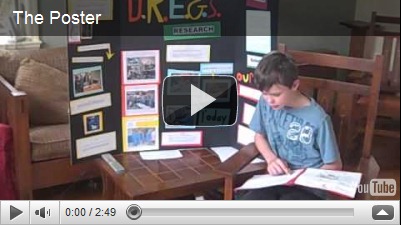
Our solution was DREGS: Disaster Robotic Emergency General Surgery. This robot cures shrapnel wounds in war situations while defending the patient.

Our Robot’s key features are:

  • A bullet proof titanium body
  • An auto turret
  • It is remote controlled

I can see this kind of robot being manufactured someday, but with a lot of updates.


Video: First Lego League Poster

Here is a list of articles we used:

Thursday, October 21, 2010

King Henry VIII

King Henry VIII was a very important man.  Besides his six marriages, Henry VIII is known for his role in the separation of the Church of England from the normal Catholic Church. Henry's battles with Rome led to the separation of the Church of England from papal authority. Since he wanted to divorce his wife but couldn’t because of the pope he made himself the leader of the church. He changed religious ceremonies and rituals and suppressed the monasteries, while remaining a believer in core Catholic teachings.

Henry was an attractive and charismatic man in his prime. He ruled with absolute power. His desire to provide England with a heir, led to the main thing that Henry is remembered for today: his wives. I know I should respect history people but he was one heck of a hound dog. If I had a time machine I would send back a IPod with all of Elvis’s music.

Friday, October 15, 2010

A Kids Voice For Blog Action Day

Change.org|Start Petition


Hi many of you may know about blog action day, its a day where bloggers around the world all work together to raise awareness of one particular problem each year. This year the problem is water all though I know its a pretty big problem all over the world like in places where dirty water kills 80% of the people who live there I think there bigger problems like my sisters face, no just kidding she.... has....... a very.......pretty......face..... HA HA HA LOL ROFL A HA HAAAAHAHAHA HA HA HA! anyway I just want to tell you how big a deal it is so please join us in our fight against  water, Justen Bieber, war, my sister and all the other threats to the world.

Friday, September 17, 2010

Secretariat


Last night I went to see the movie Secretariat with my friend Catherin. We both liked it a lot. It was about a mom that finds out her mom died.  She then goes to her mom’s house where she then finds out that one of their best horses is pregnant and raises the baby to be one of the best race horses ever. Both of our favorite parts were when the trainer swears in French. The one bad thing about it was that nothing blew up, I have a dark and twisted mind! ;)

Sunday, August 8, 2010

Book Review Of The Number Devil

I'm guessing that I don't need to say what this is a book review of because you have probably read the title if not look up you nit wit (no offence). The Number Devil by Magnus Enzensberger is one of those classic books that you need to read before you die. It combines math with a lot of humor so that you learn while not falling down on the floor dying.


In the first chapter they introduced Robert (the main guy) and the number devil. The number devil was a guy that keeps appearing Roberts’s dreams and teaching him math. And they talked about how simple numbers are and they talked about one and how you can make any number with it. (At the end the number devil blew up)


In the next chapter it talked about how important the number 0 is. They said that without it you can’t have place value and that it was the last number to be found.


In the next chapter they talked about division and prime numbers in a cave.


In the forth chapter they talked about reminders on the beach with a giant fuzzy calculator. The number devil and Robert got into a argument on whether or not the nine chain would ever reach 1. (Remainders are what’s left over when you divide.


The fifth chapter talked about triangle numbers in the desert. A triangular number is the number of dots in an equilateral triangle evenly filled with dots. For example, three dots can be arranged in a triangle; three is a triangle number. The ninth triangle number is the number of dots in a triangle with no dots on a side.


In the sixth chapter they talk about Fibonacci numbers in potato a field. Fibonacci numbers are a way of counting in which the next number is the sum of the previous two.


In the seventh chapter they built a pyramid out of cubes and did a bunch of math stuff with it.


Eighth chapter they talked about number combinations. Like ABC BCA CBA ACB BAC and so on.


In the ninth chapter they talked about fractions and the number 1.618. 1.618 is a weird number because it’s everywhere. People have done a lot of math and the number keeps popping up. It’s called the golden ratio.


In the tenth chapter they talked more about the golden ratio. They also talked about geometry and some paper cut outs that fold into shapes!


In the eleventh chapter they talked about proving numbers on a roof garden. They said it was like crossing a stream every time you think your almost there you get stuck.


In the last chapter they talked about pie in number hell/number heaven.


I did not really like the book but it did teach me a lot about math. I think I know about stuff my big sister Kayla does not know =).

Monday, July 19, 2010

Marco Polo and The Silk Road

I went to a Silk Road exhibit at American Museum Of Natural History. The Silk Road was a big network of trading routes. Not just single road. They had each country shown as part of it and you could go to each place and get a stamp in a mini stamp book. It had live silk worms too! Another thing I learned was that it went through Europe, Egypt, Arabia, Persia, India, China, Java, and Somalia. It was very boring.


After it we stopped at the gift shop and got a book called Animals Marco Polo Saw. It was about Marco polo’s travels through the Silk Road. It talked about how when Marco made a book about his travels, it inspired people to explore and talk to new countries. This changed the whole world.

Marco Polo was a trader in the Silk Road. He was born in Italy September 15, 1254. In 1271, he started a journey through the Silk Road. When he got back he made a book about his trip which became the very first travel guide. That was how he became famous.


Here is a link to the book:

Thursday, July 8, 2010

Learning About The Battle Of Hastings

The Battle Of Hastings was a big historic battle between the Norman and the English people. It took place at Senlac hill 14 October 1066. The English were lead by Harold First and the Norman were lead by Duke William 1 of Normandy.


I read a book about William the First called William The Conquer And The Battle Of Hastings by Micheal St Jhon Parker, and this is what I learned from it.:

William the First was a king of England who was born around 1027 and died in 1087.  He was the king at the Battle of Hasting. After he won the battle he was nicknamed William the Conqueror.

The other book I read was The Battle Of Hastings by Chris Priestly.


The Battle of Hastings was important because it would decide who would take the throne and be the King of England. Also after this battle Normandy was introduced to a new system of government in which the king would usually offer to his warriors a plot of land called a fief, in exchange for their loyalty.  And it would decide who the next king would be.


Here are two of the books I read:

Wednesday, July 7, 2010

Learning About Vikings

Who Were The Vikings?

Vikings were people who lived in 800 AD to 1050 AD. They lived in Europe. One important Viking was Arick The Red. The Vikings were strong fighters. They invented the axe, the hammer, and the flat bottom boat! AND they were the second to find America! They were fighters, farmers, raiders, and traders! So the better question is who were the Vikings not?


In my unit on Vikings I read a book by Frid Inguistad. It was a historical fiction with historical inaccuracies (like the fact that the Vikings did not end with peace with the natives) called Magnus the Viking. In this story a Viking boy goes to Vinland and meets a Native American boy named Maku. But can the two boys stop the war between the two groups?

One more book I read for my unit was called History dudes: Vikings by Rich Camdo here is what I wrought about it:

Do you know the word berserk? Do you know it’s a Viking nick name? Ber is bear in Viking and serk means shift in Viking. So berserk means bear shift. Vikings went “berserk “in battle it was said that when they went berserk they became powerful fighters, and they sometimes killed their own friends!


So as I said Vikings were a lot of things not just fighters and raiders like most people think!

Here are some of the books I read on vikings:


Tuesday, July 6, 2010

Learning About Leanardo Da Vinci

I did a unit in school about Leonardo Da Vinci. This unit included reading books about Leonardo Da Vinci, watching movies about Leonardo Da Vinci, and reading websites about Leonardo Da Vinci. Some books I read about Leonardo were:


• The Da Vinci Cod by Chris Riddell

• Leonardo Da Vince by Kathleen Krull

• The Second Mrs. Giaconda by E.L. Konigsburg

• Amazing Leonardo Da Vinci Inventions by Maxine Anderson

• Who Can Crack The Leonardo Da Vinci Code? By Thomas Brezina

• Masters Of Art Leonardo Da Vinci

• Getting To Know The World’s Greatest Artists Leonardo Da Vinci

• Leonardo Da Vinci Dreams, Schemes, and Flying Machines

• The Importance Of Leonardo Da Vinci

• Neo Leo


Who Can Crack The Leonardo Da Vinci Code? By Thomas Brezina


The book who can Crack the Leonardo Da Vinci Code? Is a time travel mystery about a young boy who lives in present time and goes through a panting of Leonardo, which takes him into the past when Leonardo lived. He went through time so that he could solve a riddle and open a box left behind from Leonardo. This book was a funny, historical fantasy book.


Making Monalisa Smile by Nick D Alt

In my unit I also read an article in the magazine Odyssey: Adventures in Science that talked about a computer that could read peoples smiles and figure out if they are happy, angry, frustrated, or confused. This could be useful for when people are learning a new language with a computer program which does not make sense. The computer can change the lesson making it easier to understand. I do not think it would be very helpful though because if you’re in the middle of something and then get hit by a rock you wince and everything your reading changes so you have to read it all over again and when you face settles down and you were half way done with what you were reading it changes again.


Leonardo’s Horse by Jean Fritz


One of the other books in my Leonardo Da Vinci unit was a book about Leonardo building a really big hoarse out of copper. In the book he said that he would make the ears of the horse pointing back to show that it was listening to its rider’s commands. It also said that Leonardo made a clay model first. At the end of the book it said that the horse was completely destroyed in an enemy attack. In real life he built the clay model but never got around to building the copper version. So it is a good historical fiction because it brought the story to life but it is not very factual.


I watched a movie called Leonardo Da Vinci. It showed all of his paintings and some of his inventions in a funny way. That made it easier to understand. I did not like it very much because I thought it was too cartoony. Although little kids (I call my Minions) might like it.


I watched a bunch of TV shows on YouTube called Doing Da Vinci in it they built a tank, a war caret, and a sedge tower! Here is a link to the videos: http://dsc.discovery.com/videos/doing-davinci-tank-test.html


My visit to a Leonardo Museum


A while ago I went to a museum exhibit about Leonardo it was filled with Leonardo inventions here is a list of the inventions from it:

• A tank

• A bridge ( me and dad argued whether it would work )

• A flying contraption

• And a weird canon


Here is a picture from it:


I’m the one in the green jacket.


Mrs.Giaconda by E.L.konigsburg

One of the last books I read was about Leonardo Da Vinci’s life from the point of view of his helper Salai. The book said that Salai used to be a pickpocketer! It also said that Leonardo needed Salai so that the tame Leonardo could live with the crazy criminal Salai but that’s mushy gushy deep feeling it is too boring blah. I think that the book was supposed to be about why Leonardo made the Monalisa but its more about his life.


Here are some not so fun facts:


• Did you know that Leonardo had a rival? He did! His rivals name was Michelangelo the two artists don’t get along. Leonardo made his artwork more realistic but Michelangelo did not like that.

• Did you know that Leonardo helped with community problems? He ones stopped a plague in a city! He invented a Sewer that got rid of the waist that was making it!

• Leonardo Da Vinci took three years to paint the Monalisa!


• The renaissance ( the time when Leonardo Da Vinci was alive ) means rebirth


Here are some links to books I read. ( if you were going to get something on amazon please use the link from my blog, i get money :D)

Tuesday, May 25, 2010

Look at my outer space


My friend Ryan came ove and helped me make...

Thursday, May 13, 2010

Saxons

Saxons and Vikings
Saxons lived at about the same time as the Vikings. The Vikings lived in a place called Green Land. Although Saxons and Vikings were very different people, they shared many similarities. They both had similar swords, spears and axes! They also wore the same clothes such as the following: thick trousers, tunics, long dresses, and leather shoes with woolen cloaks! They could even understand each other’s language! They also had the same belief that runic letters had power! I think they were similar people.

Saxons
The Saxons were people who lived around the 5th century. They are descendents of a German tribe who took over Brittany. Here is a list of facts about them:
· It was considered lucky to wear a small metal pig on your head because pigs are sacred to their god Freyja.
· When they burned their dead, they put their ashes in a pot with a window so that the spirit could get out and not be stuck.
· They believed that a red sky at night means that there will be a storm.
· They also thought that if you cut off the head of a dead body, it can’t haunt you.

Saxons were a very interesting people.

Wednesday, May 12, 2010

salt

Salt is a kind of mineral made mostly of a thing caled sodium chloride that is essential for animal life, but can be realy bad to many plants. Salt flavor is one of the basic tastes, making salt one of the oldest, most ubiquitous food seasonings. Salting is an important method of food preservation.


Friday, May 7, 2010

ROBLOX

sirepicafy is always forging brilliant killer robots at ROBLOX

PLAY ROBLOX

Take a look at my home made profile at the pleasing world ROBLOX